The TP-Link USB WiFi 6 Adapter review centers on the Archer TX20U Plus, a desktop-oriented adapter that adds dual-band WiFi 6 connectivity through USB 3.0.
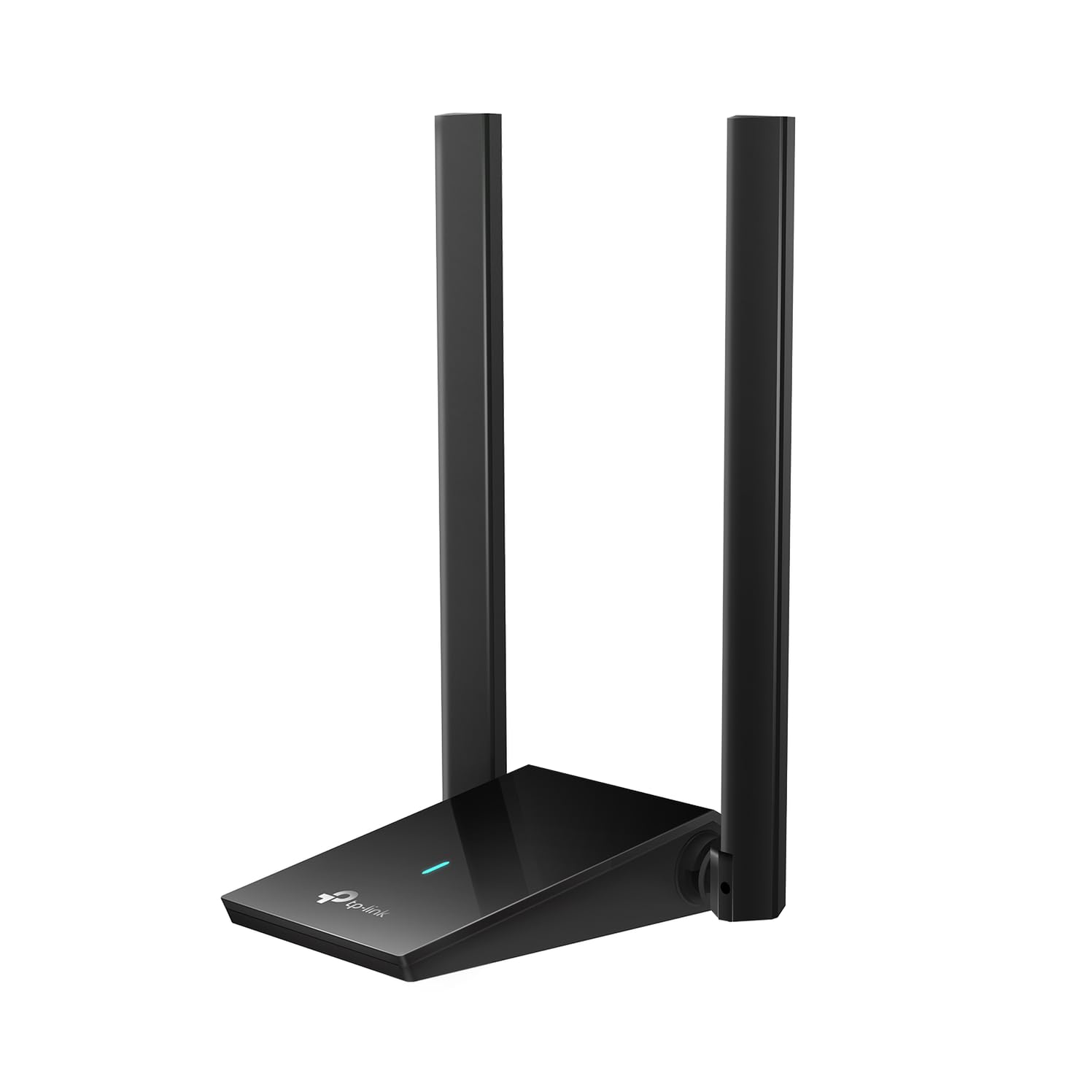
Its adjustable high-gain antennas and one-meter cable make it a practical option when you want to position a wireless adapter away from the back of a PC.
Archer TX20U Plus Review Summary
The quick verdict
10,000+ ratings
Read Amazon ReviewsTP-Link Archer TX20U Plus
A desktop-focused WiFi 6 adapter for Windows users who want dual-band connectivity, adjustable antennas, and flexible placement through a USB cable.
- WiFi 6 (802.11ax) connectivity, rated AX1800 class.
- Dual-band support: up to 1,201 Mbps on 5GHz and up to 574 Mbps on 2.4GHz.
- Two high-gain, 5dBi antennas that can be adjusted in multiple directions.
- Beamforming, OFDMA, and MU-MIMO support.

Pros
- Adds WiFi 6 and dual-band connectivity to a desktop through USB.
- Adjustable external antennas and a one-meter cable allow more deliberate placement.
Consider before buying
- The full stated performance depends on using a USB 3.0 port; a slower port may limit the connection.
- It has a desktop-style external antenna design, so it is less compact than a small adapter that plugs directly into a port.
Read the full review summary
The Archer TX20U Plus is designed to give a desktop PC access to WiFi 6 without replacing internal hardware.
It supports 2.4GHz and 5GHz networks, with theoretical link rates of up to 574 Mbps and 1,201 Mbps respectively, for a combined AX1800 class rating.
Those are maximum connection rates rather than guaranteed internet speeds; actual results depend on the router, network conditions, and setup.
Its clearest appeal is the combination of external adjustable antennas and a one-meter USB 3.0 cable.
That arrangement gives you more choice about where the adapter sits than a compact plug-in dongle, which can help when the desktop is tucked under a desk or close to other equipment.
It is a Windows 10 and 11 option, while the mention of manual driver upload for Mac OS means Mac buyers should check compatibility and setup requirements before choosing it.
The buying factors
Archer TX20U Plus Scorecard
Editorial scores reflect listed features and buyer fit; they are not laboratory measurements or customer ratings.
Dual-band flexibility
Both 2.4GHz and 5GHz bands are supported, with different maximum rates for each.
WiFi 6 features
WiFi 6, OFDMA, and MU-MIMO support make it a feature-rich option for a desktop adapter.
Antenna positioning
Two adjustable high-gain antennas and a one-meter cable give useful placement flexibility.
Desktop fit
The external antenna design and cable are aimed at desktop use rather than a tiny travel adapter.
Operating-system clarity
Windows 10 and 11 are supported; Mac OS involves manual driver upload, so setup is less straightforward.
Security support
WPA3 support provides compatibility with a newer WiFi security protocol when the network supports it.
Key Features and Specifications of Archer TX20U Plus
- WiFi 6 (802.11ax) connectivity, rated AX1800 class.
- Dual-band support: up to 1,201 Mbps on 5GHz and up to 574 Mbps on 2.4GHz.
- Two high-gain, 5dBi antennas that can be adjusted in multiple directions.
- Beamforming, OFDMA, and MU-MIMO support.
- USB 3.0 connection with a one-meter cable for flexible desktop placement.
- WPA3 support; Windows 10 and Windows 11 are listed, while Mac OS requires manual driver upload.
Pros and Cons of Archer TX20U Plus
Pros
- Adds WiFi 6 and dual-band connectivity to a desktop through USB.
- Adjustable external antennas and a one-meter cable allow more deliberate placement.
- Supports OFDMA and MU-MIMO, features designed to manage traffic when compatible devices and routers are involved.
- WPA3 support is useful for networks configured to use that security standard.
Consider before buying
- The full stated performance depends on using a USB 3.0 port; a slower port may limit the connection.
- It has a desktop-style external antenna design, so it is less compact than a small adapter that plugs directly into a port.
- Windows 10 and 11 are the clearly supported systems; Mac users should confirm the manual driver process suits their setup.
Who Should Buy Archer TX20U Plus?
Good fit
Consider the Archer TX20U Plus if your desktop needs wireless networking and you want WiFi 6, both common WiFi bands, and the option to reposition the adapter with a cable.
The external antennas give you practical control over orientation and location, especially if the computer itself sits in a cramped or awkward spot.
It is also a reasonable feature match for households with a WiFi 6 router and multiple devices sharing the network.
OFDMA and MU-MIMO support are relevant to that environment, though they do not guarantee a particular speed or lower latency; the router and connected devices need to support compatible features too.
Before buying, check that the PC has an available USB 3.0 port and that its operating system is supported.
If you use a Mac, verify the driver steps and compatibility for your specific setup before relying on this adapter.
Who should skip it
Skip it if you need a minimal adapter that stays flush against a laptop or occupies as little space as possible. Its cable and two external antennas are chosen for desktop placement flexibility rather than the smallest footprint.
Look elsewhere if you require a clearly supported plug-and-play Mac setup or need a wireless solution for a system outside Windows 10 and 11. Confirm the relevant driver support before purchase.
How the Archer TX20U Plus Fits a Desktop WiFi Upgrade
Dual bands and the AX1800 rating
The adapter can connect on either 2.4GHz or 5GHz, with maximum rates of up to 574 Mbps and 1,201 Mbps respectively.
The higher 5GHz figure can suit a compatible network where speed is the priority, while 2.4GHz offers another band option. These figures describe the adapter's maximum wireless link rates, not a promise of real-world internet throughput.
Why the cable and antennas matter
A desktop tower's location can constrain where a small USB adapter sits. The one-meter cable lets you move the TX20U Plus away from the computer, and its adjustable dual antennas give further control over orientation.
This design offers placement choices, but the best position will depend on the room, router location, and surrounding obstacles.
WiFi 6 traffic features
OFDMA and MU-MIMO are supported alongside WiFi 6. These features are intended to help compatible networking equipment handle traffic among multiple devices, so their value depends on the router and the rest of the network.
They are useful compatibility points for a newer home network, rather than a substitute for checking signal conditions or internet service.
Compatibility and setup
Windows 10 and 11 are listed as supported, and the setup guidance calls for a USB 3.0 port and disabling the PC's internal WiFi before installation.
Mac OS is mentioned with a manual driver upload requirement, so buyers on that platform should confirm the process fits their version and workflow. The adapter's WPA3 support also depends on using a network configured for WPA3.
Alternatives to Archer TX20U Plus
No alternative model is recommended here. Compare the design and features that matter to your routine before choosing another option.
Is Archer TX20U Plus Worth It?
The TP-Link Archer TX20U Plus is worth considering for a Windows desktop that needs WiFi 6, dual-band support, and more control over adapter placement.
Its cable, adjustable antennas, and support for WPA3, OFDMA, and MU-MIMO give it a useful desktop-oriented feature set.
Check USB 3.0 availability and operating-system compatibility before buying, especially if you use Mac OS.
If you are comfortable with its external design and your router supports the features you want, it is a practical candidate for adding wireless connectivity to a desktop.
Your review at a glance
10,000+ ratings
Read Amazon ReviewsTP-Link Archer TX20U Plus
A desktop-focused WiFi 6 adapter for Windows users who want dual-band connectivity, adjustable antennas, and flexible placement through a USB cable.
- WiFi 6 (802.11ax) connectivity, rated AX1800 class.
- Dual-band support: up to 1,201 Mbps on 5GHz and up to 574 Mbps on 2.4GHz.
- Two high-gain, 5dBi antennas that can be adjusted in multiple directions.
- Beamforming, OFDMA, and MU-MIMO support.